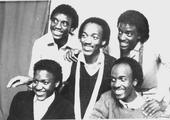
Thursday, 29 March 2012

Jinxed Chinxed - the guerrilla

I have met Cde Chinx twice. The first time was in 2003 when I was writing for the Standard. The first time was in my office down-town Harare.
The second was when he came to Herald offices to complain and ‘put the record straight’ after reports that his house illegally built in some undesignated part of the city was demolished while he begged. There were also reports that he was beaten when he tried to stop the demolition crew. He said all the reports were false.
I have also heard about him a lot. The latest were reports that he had resorted to illegal fishing in Lake Chivero.
The polygamist who fought in the liberation war claims he is yet to benefit and that only those who ‘refused to go to war’ benefited.

Below is an excerpt of the interview he did with Godwin Muzari

‘Things are not working well but I know that is the way it is.
‘You cannot expect things to go the way you like all the time but I believe my time shall come.
‘I tell you, by 2015, I will be singing a better song,’ said Chingaira.
‘I have a farm but there is no electricity to do serious projects.
‘I am looking forward to starting poultry and piggery projects as soon as we have electricity.
‘We are also trying to set up irrigation facilities to facilitate the opening of more projects. At the moment we are just farming on a small scale and this new fishing project promises to be a lucrative venture. ‘I think it will take us somewhere.’

Cde Chinx is one of many musicians whose dip in fortune are mistaken for their support for Zanu-PF yet when most of the musicians accepted the invitation to sing for Zanu-PF, they were already on the down-slide.
Take Simon Chimbetu, for example, his fortunes had started waning when he released a remix of his old songs. Andy Brown too had his career dead when Chioniso Maraire and the late Mendy Chibindi left his group. And Cde Chinx never had a real musical foothold after the death of Ilanga.
In a way, the Hondo Yeminda campaign put some of the artists back on the radar.
But Cde Chinx, Hondo Yeminda was a continuation of the struggle he had started while in Mozambique when he teamed up with Cde Max Mapfumo who turns up for the Jupiter Kings to inspire the cadres. After the war, Cde Chinx was part of the Zanu-PF choir that had the likes of the late Ketai Muchawaya, Knowledge Kunenyati and Marko Sibanda.
Growing up, Cde Chinx never conceived of himself rising to become one of the finest musicians in Zimbabwe for he wanted to pursue an academic career.
Born Dickson Chingaira in Rusape, Cde Chinx’ interest in music started at Chigora Primary School.
On completion of secondary school Cde Chinx got a place to study medicine overseas but he failed to get travel documents and the whole plan failed to materialize. He had always wanted to be a doctor thus he was frustrated when his father who was a carpenter could not raise enough money to send him to a school that could allow him to pursue his dreams.
He then took up a job in 1974 with an engineering plant in Msasa, Harare earning $7 a week but was very unhappy there as his white South African superiors kept calling him names such as terrorist, kaffir, and gook.  This constant abuse forced him to leave his job without giving a proper notice and in 1976, Chinx left for Chimoio in Mozambique to join the liberation struggle.
When he arrived at Chimoio, one of the commanders Cde Mhere Yarira remarked that their group was jovial and as such they should form a choir. The choir that was formed was called Takawira in honour of the late nationalist Leopold Takawira. Takawira choir became just but one of many other choirs which boosted freedom fighters’ morale during the war. Cde Chinx had joined the guerrillas with the sole aim of liberating Zimbabwe but found himself leader of the then Takawira choir which in no time changed its name to Zanla Choir, which acted as a morale booster for the fighting cadres when Cde Mhere Yaraira who led the group was transferred.
Choir that was an amalgamation of all the choirs which had been active during the war. The Africans had but only won political power otherwise economic power was still in the hands of white Rhodesians as was to be reflected but the turn of events in Chinx music career. Choirs were regarded too protest and radical by recording studios that were there at the time and this forced Chinx to change from the genre he was into to more contemporary music. He then went on together with Keith Farquarson to form the group Barrel of Peace. Teaming up with Bennie Miller they recorded hit songs such as Ngorimba, Zvikomborero and Marching.
Latter on they joined Ilanga, a group that was formed in 1986 by musicians who had ganged up together from their various groups. After a short stint with Ilanga he moved on to team up with Mazana Movement Band and then later with Mazana Movement Black Spirits.
 This led Chinx to form his own backing group in order to promote his music commercially. It was not until 1989 that the Early Hits album of Comrade Chinx was released. His most outstanding hit, Roger Confirm stayed on Radio 3’s Hitpick charts for 25 weeks in 1989 and early 1990. 
Apart from being an innovative musician, Cde Chinx is a great songwriter whose songs are timeless classics. Vanhu Vose VemuAfrica for example captures the essence of humanity and unity in the face of injustice and unfairness.  Every year during the Heroes and Africa Day holidays, all radio stations in Zimbabwe play Comrade Chinx’ liberation songs. His song, Vanhu Vese VemuAfrica was voted the Silver Jubilee Award for the Most Inspiring Song of the Liberation War during the 2005 National Arts Merit Awards.
Getting awards is something Cde Chinx has learnt to live with; in the early 90s he also got a double from MNET Africa for the movie Flame in which he played a major role and had his song, Maruza Vapambe Pfumi which then won the best soundtrack. All this shows that Cde Chinx is a force to reckon with in the Zimbabwean film industry.
Cde Chinx’ role is not only confined to the war of liberation where as a choir master, he soothed sore hearts and comforted bruised minds but even after independence when he used his skills to further talents. He has proved to be dynamic and his ability to move with time as well as his experiment with sound as in his genre called Ngorimba has indeed placed him at a level parallel to none in the Zimbabwean Arts.
Yet today, this man who, although did not go out to the war-front – did as much through song. Today, Cde Chinx is the laughing stock of both musicians who took part in the Hondo Yeminda campaigns and the war of liberation.

Saturday, 17 March 2012

Devera Ngwena exploited & cast out


A number of things happened in 1979 musically.
Job Mashanda was riding high with his Amai Mandigona super hit which he did with the backing of the Muddy Face Band. Oliver Mtukudzi had Ndiri Bofu doing the rounds.
At that time too, two local rhumba groups emerged – Devera Ngwena Jazz Band fronted by Jonah Moyo and Mashura and the Okavango Boys.
While the Devera Ngwena beat was calm, controlled and penetrating as shown in their debut single Devera Ngwena Zhimozhi, the Okavango Boys’ beat in Andrea was fast and danceable.
It must be pointed out that the Devera Ngwena and Okavango Boys’ music were the first home-grown rhumba-like beat. The OK Success had bent over 360° from producing central African rhumba to afro-pop in their songs such as
Jonah Moyo who formed and led the Devera Ngwena describes his music as Tsavatsava. But those who know music will describe the music as a crossover from cha cha cha to some mild form of east African rhumba. Some would call Devera Ngwena’s music sungura. But sungura is dominated by the bassline yet Devera Ngwena’s music has the lead guitar defining it.
Today, however, it has become a tendency to lump together songs which people find difficult to define as sungura.
But I had the opportunity to meet Jonah in 2006 at Jazz 105. His brother Aaron Chiwundura Moyo who is my friend linked me up with the great musician.
Jonah had just visited from South Africa where he has been based since his star started to dim a few after the split of the band over a disagreement on leaving the mine in 1985.
Yet Jonah’s first steps into music were not so much for money or fame but girls. Working and staying on a farm in Kwekwe, Jonah says he started out playing the banjo to win over girls’ hearts. When he left Horseshoe Farm for Kwekwe, Jonah realised that he could indeed make music not for the girls but for the nation.
Later, he found employment at Gaths Mine and played in the mine’s band called the Gaths Mine Welfare Band in 1978. Just like the Hallelujah Chicken Runn Band, Gaths Mine Welfare Band was for entertaining mine workers. Most of the band members also worked at the mine and only played during certain times. Jonah was a clerk.
The mines owned the instruments and took all the proceeds from shows or recordings if there were any.
The Gaths Mine Welfare Band had as its members: Innocent Bitu who had had a stint with the Jairos Jiri Band; Biggie Phiri and Robson Banda who later left in the early stages of the Devera Ngwena to form the Black Eagles. Jabulani Bitu came in for Banda.
In the case of Jonah Moyo and the Gaths Mine Welfare Band, they were not supposed to record or play outside the mine compound until one night when the group played before more than 500 people. This was more than enough evidence to the mine owners that the group could make money for them if they allowed it to play outside and record.
Even before that, Jonah had secretly approached Teal Records (now Gramma) for recording but it was after the relaxation of the contract which saw the group taking up the name Devera Ngwena Jazz Band in 1979.
This was when the group unleashed Devera Ngwena Zhimozhi which tipped the scales at independence. There was not much to the lyrics but a celebration of music and life. Devera Ngwena Zhimozhi/ Chimbo chinofadza vakuru nevadiki/ Devera ngwena Zhimozhi. But somehow the beat caught up with people and set the tone for all their happy-go-luck type of music. And from 1979 till 1986/7, the group would release about two albums per year and sell in hundred thousand. They came in form of Anoshaina Nemabhebhi, Nhai Gremma, Taxi Driver and Wangu P. But it was the group’s Solo naMutsai which showed how good and different they were from the rest.
The group usually sold in the excess of 50 000 copies and their song Ruva Remoyo Wangu hit through the ceiling – most probably the first ever after independence to sell more than 120 000 units.
But years of playing and selling had not translated into anything meaningful for the band members. The mine still took all the proceeds and paid the players wages. Jonah wanted out but some members of the band opted to stay.
This disagreement led to a split of the band in three – Jonah went with the name Devera Ngwena; the Bitu brothers Innocent and Jabulani - and Jonisai Machinya formed Zhimozhi Jazz Band while two other members formed Petro naJohane.
Jonah roped up new members Chengetai Kandimi, Patrick Kabanda, Christopher Ncube, Kudzi Mashereni and Mashi Mashereni and set his base in Limpopo, South Africa.
This was the outfit which toured England, Scotland, and Holland in 1987 playing at Glastonbury Festival in Holland.


Sunday, 11 March 2012

Sungura the Band and the music - origins


The absolute master of sungura music is John Chibadura, who brought it to the bright lights of Harare from the backwaters of Domboshava riding on the ashes of Mverechena Band in the early days of independence.

Chibadura was there when the first ever sungura song, Huri Hwese naKatsande, was released by the Dzivaresekwa-based Holy Brothers Band. He was there together with Shepherd Chinyani, Sam Chikadzura and Fox Maluwa.

Chibadura and Chinyani introduced the brand to Ronnie Gatakata, Ephraim Joe, George Matizha, Moses Marasha, Never Moyo and Bata Sintirawo, who were based at a Mtoko hotel.

Chibadura stole the shine from the Chimbetu Brothers when the Sungura Boys were expelled from Mushandirapamwe Hotel, where they backed the brothers.


There has been a lot of debate on the origins of sungura and how it ended up being served as one of Zimbabwe's hottest music menus.

Before sungura, there was just Afro-pop, and that meant Thomas Mapfumo and Oliver Mtukudzi's style and that of any other Zimbabwean musician. There was also Afro-jazz.

This was the situation until the birth of the Sungura Boys – a grouping of rustic farm dudes who started playing on the farms, especially Mashonaland Central - Shamva, Bindura, Mvurwi as well as some parts of Mashonaland West - Chinhoyi, the scattered mines – and Beatrice.

The name sungura is taken from a Swahili folk tale which means rabbit. The earliest east African rhumba records had a picture of a rabbit as part of the label.

These records were trendy on Zimbabwean farms long before the end of the war when comrades who returned home and had received their training in Tanzania introduced it to rural areas.

Even then, sungura had to gain momentum outside Harare before it was accepted a few years after the war. 

One such place was the then Gillingham, now Dzivaresekwa, where most boys from the farms first stayed and met Shepherd Chinyani.

I refer to virtually every popular Zimbabwean sungura artist – the Chimbetus – Simon and Naison - Nicholas Zakaria, John Chibadura, Alick Macheso, the Ngwenya Brothers, Ephraim Joe and Tineyi Chikupo, among many others.

Just at what point the brand of Zimbabwean rhumba was christened sungura is unclear. But what is known is that the band that became the Sungura Boys was initially called the Holy Brothers Band while based in Dzivaresekwa in the late 70s. Then there was Chinyani, Chibadura, Sam Chikadzura and Fox Maluwa.

This group released the first sungura song called Huri Hwese naKatsande. 

Later, the group disbanded, and the members moved on. Chinyani and Chibadura joined Tineyi Chikupo in his group, the Mother Band. 

When Chikupo left, Chibadura and Chinyani travelled to Mtoko, where they joined Ronnie Gatakata, Ephraim Joe, George Matizha, Moses Marasha, Never Moyo and Bata Sintirawo who were based at a hotel at Mtoko Centre.

When the war heated up, the group relocated to Domboshava, set base at Mverechena Hotel, and assumed the name Mverechena Jazz Band.

The group again changed its name from Mverechena Jazz Band to Sungura Boys when they relocated to Mushandirapamwe Hotel to back the Chimbetus after the abrupt departure of the OK Success.

Chris Matema of Gramma Records advised the Chimbetus to approach the band in Domboshava for help. A deal was struck, and sungura the music and Sungura the Boys came to Harare.

But after a while, the Sungura Boys, just like the OK Success, felt that backing the Chimbetus, who had assumed the name the Marxist Brothers even when they recorded with the Boys' backing, was not working.

The Sungura Boys backed the Chimbetus on their earliest singles, Patakatsika, Sarura Wako, Denda, Tezvara Waramba and Ndiri Musonja.

But the Sungura Boys wanted a share of the pie and recruited John Chibadura as a vocalist. Thus, Chibadura, who had cut his teeth in Dzivaresekwa with Chinyani, came to Harare for the second time.

When the stand-off heightened, the Sungura Boys were asked to leave Mushandirapamwe Hotel. Fortunately, this allowed Chibadura to rise, and he did.

But again, his fame did not go down well with others resulting in Chibadura leaving the group in 1985 to start his band, The Tembo Brothers. With Chibadura's departure, the Sungura Boys died a slow death.

It was, however, replaced by the Khiama Boys, formed and led by Nicholas Zakaria, who had emerged from the Mazowe farms via Gillingham, where he rubbed shoulders with Chinyani.

Even Ephraim Joe moved over to Khiama Boys before he went solo. There were many others: Cephas Karushanga, System Tazvida, Alick Macheso and Sailas Chakanyuka.

At its height, the Khiama Boys unleashed one mega-hit in the name of Mabhauwa that ushered in System Tazvida as a great and unique vocalist. 

But the success of Mabhauwa also meant a split that saw Karushanga forming Mabhauwa Express and System Tazvida founding the Chazezesa Challengers. 

Much later, Macheso formed the Orchestra Mberikwazvo when he, too, found himself in the cold after Zakaria took leave and locked up all the instruments.

Tuesday, 28 February 2012

James Chimombe's music refuse to die


I have met James Chimombe’s son Freddie three times. The first time he came to give me a story about how the Zimbabwe Music Rights Association (Zimura) had ripped him off.
The other two times was when I did a story about him the first time he went to stay in the squatter camp at Hopley. By then he had just started feeling unwell.
I first passed by his mother’s house in Jerusalem section of Highfield where I met his sisters. It was also during the time when Diana Samkange had goosened up James Chimombe’s song.
The family was very bitter about it. I felt bad too that I had given Diana Freddie’s contact details when she was working on the song.
Freddie’s mother, who had separated from James when he died, said she gets frustrated whenever she watches TV or listen to the radio and hear the songs her ex-husband did.
‘I remember he wrote some of the songs in this house,’ she told me. ‘Now I hear and see people I do not know messing the songs up.’
But I put together James Chimombe’s story from a number of people among them his long time band mate who also blew the legendary sax on all the songs, Daram Karanga.
James started his career as a vocalist with the Mutare-based Pop Settlers before moving to the Harare Mambos. His next stop was a brief stay at Thomas Mapfumo's Acid Band in the early 70s as a lead guitarist then he hopped to the OK Success in the mid-70s alongside Susan Mapfumo and Simon Shumba. It was long before the time when the Chimbetus- Naison and Simon – had the backing of the group at Mushandirapamwe Hotel at Machipisa in Highfield.
At the time, the OK Success that was led by Andrew Ngoyi who had chosen to settle in the country from the Congos embarked on singing songs in Shona. Some of the songs were the OK Success released singles such as Baba VaBhoyi, Sekuru, Amai, Lupwai Abwela, Gore Rakapera and Mudiwa Mary.
It’s not also clear whether James was in the band at the same time with Lovemore Majaivana, Fanyana Dube and Virginia Sillah 9who later joined Harare Mambos).
Daram met James in Chitungwiza when the dormitory town had just been established. At the time, Daram had left Mhangura Mine where together with Thomas Mapfumo they had formed the Hallelujah Chicken Runn Band. When the band disbanded, the guys moved to Chitungwiza where council management contracted them to perform at Chikomo Bar. They were also given houses among other perks.
But when there was a change of management, the band lost the contract and disbanded. James was working for the council at the time.
In 1983, he befriended Daram and would visit him at his house, “One day, James spoke about forming a band and I agreed to the idea,’ Daram said. ‘Since I knew Paul Mkondo who owned Hideout 99, I approached him with the idea and he too agreed to assist. At the time Safirio had had problems with his band, the Ocean City he had formed after leaving the Great Sounds. The remaining members – Phillip Svosve, Nicholas Himwala and Elias Bokosha - were looking for members. They absorbed us and James became the lead vocalist and main composer. But in 1988 Svosve and others demanded that they should also be allowed to compose and sing their songs,’ recalled Daram.
James, Daram added, refused to let them compose and sing their songs and they left.
“We them formed the Huchi Band since James had acquired his own instruments,’ said Daram who had the opportunity of composing Jikinya and Botswana as well as some chart topping songs which made James very popular.
James who died aged 39 in 1990 was one of the earliest musicians to succumb to Aids. One of his songs, Jemedza, is believed to have been a farewell song. 
Most of his songs were about love gone wrong. His beat leaned towards light rumba fused with jiti. He was among some of Zimbabwe’s musicians whose music can safely be coined pop because its popularity.
Apart from Jemedza, James song Kudakwashe which he composed for his son who was born deformed is still a great number.
While he left a rich musical legacy, James did not do so for his family. His son Freddie who took over the band after his father’s death ran it into the ground.
Freddie opened a grocery shop in Goromonzi which did not last. Then he would collect his father’s royalties which he blew.
Daram who had a fight with Freddie over royalties said the young man would buy beer for the fans every time he had a show. Freddie’s career did not last though not because of his illness but mismanagement. He sold some of the equipment and when I interviewed him, Freddie said the late J Masters had some his father’s stuff.

Tuesday, 21 February 2012

I've just been shaken - Paul Matavire a few days before his death


A few months before his death, Paul Matavire came for an interview at The Herald. It was my second time to meet him. The reporter who was supposed to interview him had a tough time when the musician declared that he wanted to be interviewed while standing. It was an awkward moment but when a smile lit his face, the people who had gathered in the reception area burst out laughing.

The first time I saw Paul Matavire was in 1988, five years after he had joined the Jairos Jiri Band, during a show at Gweru Teachers’ College when I was in first year.
His songs had already made him well known when I was in secondary school.
Seeing him in concert made a greater and deeper impression in most of the trainee teachers who were also saddened when two years later, the musician was incarcerated for rape.
It turned out that the rape case that had him sent to jail was committed in Chiundura communal lands a few weeks after the Gweru show.
The second time I came close to him and even shook his hand was in 2004 when he came to Herald House for an interview. I had just joined the paper then and he had just released his come-back album, Zimbe Remoto with the help of the South African artist Fred Gwala.
I recall vividly how he drove fear into the reporter who was interviewing him.
He stood in the reception area, staring ahead and said, ‘Can I be interviewed now.’
The reporter kindly offered him a seat but he said, ‘I want to be interviewed while standing.’
It was an awkward moment for us because nobody was sure whether he was serious or it was a plank. After a stand-off, the musician smiled and indicated that he was ready to take a seat.
He had been released from jail and was retired in Rutenga where he had a farm. Maybe it was why his stunt drove fear into the female reporter.
Unfortunately, a few months later, we heard that Matavire had been admitted into a Masvingo private clinic.
I also recall talking to him over the phone while he was in the clinic for a story I did then. One thing about Matavire was his humour even when he was down and low.
This is exactly what he did when he had appeared in a Gweru court while waiting for judgment. In 1989 before his sentence, the musician made fun of the magistrate in his song Joke of the Year. Even when he was released, he made fun of his return in the song Back from College in 1991.
‘I have just been shaken,’ he told me hiccupping in-between. ‘It’s a little wind. I will come back.’
He never came back because he died in his Rutenga village after he had been discharged from the clinic. He had relocated to the area from Maranda communal lands in Mwenezi where he was born in 1963.
I also recall talking to his young brother, Hlupeko, from Rutenga the day Matavire passed away in 2005.
Hlupeko said Matavire had shown some recovery signs from the hiccups which had wrecked him a day before he passed away.
That closed Matavire’s brilliant musical career which had started when he abandoned his social worker training to help the Jairos Jiri Band make history.
The Jairos Jiri Matavire joined was older than Dynamos and Zanu-PF. It had been formed in Bulawayo's Mzilikazi Township way back in 1959 by members of the Jairosi Jiri Mzilikazi centre for the handicapped, the group that started as a mere choir then was known as The Sunbeam Kwela Kings. When Zexie Manatsa joined the group in 1969, they changed the name to Sunrise Kwela Kings.
In my interview with Zexie, he told me that when he and his late brother Stanley moved to Bulawayo, they stayed in Nguboyenja close to the Jairos Jiri complex.
He said they could hear guitar sounds coming from the complex every day and one day they walked in to find out what was happening.
‘One day, we walked into the complex and asked for permission to test their guitars. The late Jairosi Jiri then found out that we could play better than the inmates. He asked us to play for the organisation, helping raise funds.
‘Fanyana Dube, one of the inmates joined us and we formed the Sunrise Kwela Kings.’
This is the name the band used until the late 70s when the name was changed to Jairos Jiri Kwela Band before becoming the Jairos Jiri Band when Matavire became a member.
Their song Take Cover released in the dying months of the liberation war in the late 70s was done by Jairos Jiri Kwela Band. It was the song which put the band on the musical map such that when Matavire came, he had part of his job cut out for him.
Matavire had first attended the band’s show in Gweru since the group used to perform at all Jairos Jiri centres across the country. A year later in 1982, Matavire abandoned his social worker training to join the band full time in Bulawayo after he had taught himself to play drums and the guitar.
His debut song was in honour of the founder of the organisation, Jairos Jiri titled Pamberi NavaJiri. It did not take long for Matavire to establish himself as the Clarence Carter of Zimbabwe with his explicit lyrics which also earned him the nickname Dr Love.
Despite being blind, he lost his sight aged six after suffering from glaucoma, Matavire’s lyrics describe situations vividly as if he saw the action. His two songs Tanga Wandida and Dhiabhorosi Nyoka are testimony to this.
Apart from love songs, Matavire was agreat social commentator as shown in his song MaU, Nhamo Yeusavi and Akanaka Akarara among many others.
When he was released from jail Matavire returned to Jairos Jiri Band but it was not easy for him to stay. He then left to form his own group, The Hit Machine with which he released Akanaka Akarara (1993), Gakanje (1995) and Fadza Customer (1998).
The other two albums, Zimbe Remoto and Gonye Remari were done with the help of Fred Gwala.

Thursday, 16 February 2012

Daiton the madder one of Pengaudzoke

Unlike the Chimbetus - Simon and Naison - who were never sworn enemies,the Somanjes - Josphat and Daiton - despite being bloody brothers, live in two different worlds not only in management styles but also as a family. They don't, without the help of other people, see eye-to-eye.They compete with each other and hold their grudge longer than necessary despite Daiton's brazen act of snatching away pengaudzoke from his younger brother Josphat and leaving him into the dumps. But considering all the situations, one can conclude that Daiton is the madder one of the Pengaudzoke. There is a mistaken belief that Daiton Somanje formed Pengaudzoke together with his brother Josphat. The truth is that Daiton came to join the band long after Josphat had set it off the ground in the Beatrice farming area. Daiton came as a dancer and at the time (I don’t know now) he could not play any musical instrument. Apart from putting together the group, Josphat had a great vision for the group which Daiton never had. It was this misunderstanding and lack of vision on the part of his elder brother Daiton and some of the group members that led to their split in December 2002. Just like in the Bhundu Boys where Rise Kagona took a back seat and let the late Biggie Tembo play the lead role, a reserved Josphat did the same. The Somanjes also went the Chimbetus way when talk of juju took centre stage. But unlike the Chimbetus where juju use was more of a rumuor, the Somanjes made it an open secret. In fact, Daiton blamed Josphat of bewitching his wife and driving the band’s truck to Zambia where he got the juju. What Daiton did was wrestle the band from his brother. Once again unlike in the case of the Chimbetus, who could claim ownership of the Marxist Brothers, Daiton had no right to but Josphat left because he had so much confidence in himself to pull off another successful group. Indeed in 2003, he formed the Somanje Stars and became an album per year musician. Of course, since people still had so much faith in Daiton who took over the name of the band, Josphat’s music did not rise above the water. Even Daiton’s success without Josphat could be measured by the teaspoon. Both brothers suffered without the other unlike the Chimbetus where Simon rose above Naison. What made Josphat’s situation worse was the fact that he left empty handed and had to start from scratch. With the current situation of the music industry in Zimbabwe, time hit him hard. He was arrested on allegations of raping a minor. He got TB and his band members deserted him to join Daiton. It took Josphat about 10 years to stage a return with his This Time which also brought him media frenzy bigger than the album itself. Josphat formed the group while he was working in the Beatrice farms in 1985. At the time, there was Lawrence Samaita Kamupira, Rangarirai Kenge Mpombera, Clever Somanje, Laison and Marefura Ngowela and Lameck Fadwick. Pengaudzoke was founded by the soft spoken Josphat in 1985 at a farm in the Beatrice area. They released their debut single Chinhu Chevaridzi in 1988 and the flip side had Vanhu Vandawile (People are having problems) which were both written by Daiton. Then in 1989, they had another single, Tezvara Revai Pfuma. In 1990, they made a major breakthrough by releasing their debut eight track album Kwatakabva Kure Nenhamo that featured the hit tracks Munonditaura and Famba Mwana. It was during this period when Rangarirai Mupombera and Tinarwo Chandavengerwa, cousins to the Somanjes, joined Pengaudzoke. However when things were becoming bright a disagreement swept across the group. In a telephone interview I did with Josphat in 2005, the group’s troubles started in 1993 when they were paid Z$27 000 in royalties. ‘I bought a car for Z$15 000 and put aside Z$5 500 for maintenance. We then shared the remaining Z$2 000,’ he told me. He was the only one in the group whop could drive and this did not go down well with others who wanted the money to be shared. ‘Daiton and others were not happy with what I had done. They wanted us to share the money so that they could buy clothes. I spoke to Daiton and convinced him that we still had a bright future and it stopped him from leaving,’ he said. The Ngowela Brothers indeed left in 1993 to form their own band, the Twin Brothers while Clever, Mpombera, Rangarirai and Tinarwo formed the Five Penga Penga. When others left, the brothers started to put a new group together with Lawrence Kamupira, Farai and Musafare Chakwingwa and a female dancer. With this group, they released Ndegandega in 1994 and Zvogondipei in 1995. They released two other albums – Titonganisei and Zvibate Pamhaka afterwards, ‘I wrote Titonganise with our situation in mind. It was a plea for help,’ Josphat said. Another album, Mandivavarira, came in 1998 before Sakunatsa Ndiye Sakubayiwa (1999). Their big break came in 2002 with Ndokudai Mose that carried the hit song Tsaona. Ironically, the success of this album was to be the breaking point. Josphat used the group’s car to ferry his sick mother-in-law to Malawi when Daiton’s wife was ill and there was talk about juju in the family. Daiton accused Josphat of bewitching his wife. There was alos disagreement over the vehicle. ‘I just decided to leave Daiton and Pengaudzoke in order to form my own Somanje Stars with new people I had recruited. There was Douglas Akim, Brighton Kerias, Wilson Meka and Gibson Lameck,’ he said. At the time I spoke to Josphat, August 2005, Daiton had snatched most of these musicians from his younger brother. Josphat’s life was in tatters. ‘Meka akaenda kwaDaiton. Mashows angu haabhadhare saka Vanhu vari kutiza Nzara,’ he told me tearfully. At the time, Josphat was an angry man after realising that Gramma Records had used the name Pengaudzoke to market Daiton when they had a stand-off over the album Nhengure. Daiton was claiming the album which Gramma titled Nhngure while Josphat’s recording company, the now defunct RTP also had the album and were marketing it. ‘That album should not have been called Nhengure but Inguva Chete but those at Gramma thought otherwise.’ There have been quite some swings of fortunes for both brothers. At the time Josphat made his big return, Daiton’s fortunes were on the wane. There has been talk about their reunion over the years. Indeed, the two have staged shows together and featured on each other’s albums but according to Daiton, such a thing is a pipe dream. In fact, Last Power Media had brought in Josphat to help prop up Daiton o Zvisinei Hazvo. Josphat demanded US$1000 but the company agreed on US$700. ‘There is no reunion. In fact, we were cheating the nation. Let people not think that all is now fine between us. The truth is Josphat demanded US$1 000 for featuring on the album but he was only given US$700. ‘It was not my idea but my record company thought it was wise for the two of us to come together to resuscitate my waning music career. Yes we held shows here and there after the album but it is not working. The relationship failed to work a long time ago and it will never work,’ he told the media. By the look of things, Daiton is the notorious one. He has no direction as shown by his careless handling of money he earned from Tsaona. He bought cars but today he has nothing left. ‘I sold all the vehicles and one is now rotten at a police camp after failing to redeem it because of financial problems. There is also a kombi in Marondera but it’s stuck in the yard,’ he revealed in an interview with the media in 2011. Apart from antagonising his younger brother, Daiton has also turned onto his son, Faheem who leads his own outfit, Tokudai Mose. He blames him for his misfortune and embarrassingly for sleeping with his step-mother, Annah Kezias. He has also told the media that his family hates him. ‘It all started in 2009 when I got sick. I strived with my condition for a while trying to fend for my family but all hell broke loose when my family turned against me. I was diagnosed with TB. My wife then, Annah Kezias, started abusing me physically, emotionally and verbally. I even told my son, Faheem, about it but he too started abusing me. I had nowhere to turn to and I approached my friend Esther Musango who stays in Dzivarasekwa. Esther sympathised with me and came to my rescue. We started living together in Dzivarasekwa while taking good care of me and she is now my “wife”. I am not going back to Marondera because there is no love there,’ he said. Of Faheem, he said, ‘He is no longer my son and I mean it. Have you ever heard of a son who befriends his father’s friends or enemies? Faheem teamed up with my former band members who fed him with horrible information about me. ‘They influenced him to go against me and you can’t believe it. Now he is telling the media that I am jealous of his success. What kind of father am I to be jealous of his own blood’s success? What has Faheem done so far that makes him think he is successful? I want him to be positive and behave like a son who respects his father.’ Because of this, Daiton sought an eviction order against his wife and son. ‘They pushed me that far. It doesn’t mean I am not a caring father but they have forced me to develop a hard heart because there is no mutual understanding and respect between me and my family. We are treating each other like enemies. But they can’t drive me out of my house and it is the reason I decided to take legal action by applying for an eviction order. For your own information, I sold the house already and am just waiting for these court cases to come to an end,’ he vowed. Faheem shot back, ‘I don’t know why my father is doing all this to me to the extent of accusing me of bedding his wife. I am married and we get on well with her and we have been helping each other when he moved in with his Dzivaresekwa girlfriend. ‘He even chased away some of his band members accusing them of having an affair with his wife and now he blames me. ‘He is jealous because he knows I am excelling in my music career and I am gaining a lot of popularity in Mashonaland East Province while he knows he is losing popularity musically. ‘I haven’t released yet, but judging from crowds that throng my live shows I am now far better than him. ‘Moreover, my father is accusing me of stealing goods from my own community. Because of all these accusations, everywhere I go people are asking me why I am in love with my father’s wife.’

Sunday, 22 January 2012

Rusike Brothers pacesetters


I tried Brian Rusike for an interview on the Rusike Brothers. I called him mid-morning. He was angry. He had nothing to say. I followed up on Kelly's number through the Book Café. Kelly could not talk either. But he referred me to Tawanda and Abby. Tawanda was working for a fresh fruit company in Graniteside then. After a painstaking search, I finally met him around 4 pm. He still spotted the famous 'perm', which made the Rusike Brothers distinct. Abby had already briefed him about the meeting. So we sat in his car as he narrated how they became a household name. After meeting Tawanda, I then engaged Abby on the phone for his side.


It is not every day that one meets a group that maintains a clean image in an environment where controversy is the order of the day, a group that, despite the vast talents of its members, opts to play music for leisure when others are dying to hog the limelight and a group that performs at selected functions and fundraising gigs only.

If one is to meet such a group, it has to be the Rusike Brothers, once referred to as the Zimbabwean version of the Jackson Five.

Although Tawanda, the elder of the Rusike Brothers, was not keen on any comparisons, there were two similarities: both were groups of five brothers managed by their fathers.

While the Jackson Five have since gone separate ways, with Michael courting attention for his music and weird lifestyle, the Rusike are still together – three of them, to be precise – and are leading normal lives untainted by the fame brought by the entertainment industry.

'Our clean image has something to do with our upbringing. We are Christians,' said Tawanda.

Another member, Abby, agreed, 'We were not exposed to drinking alcohol because our father was strict.'

The Rusike Brothers started small as a family act on the Copperbelt in Zambia in the 70s. The outfit then had Tawanda, Phillip and Abby. They became five when their twin brothers Collin and Kelly joined them.

'We started at school where we took part in choirs and dramas and at church,' said Tawanda.

Their father, Abiathar, was a son of a Methodist reverend, Mathew Rusike, who founded the Rusike Children's Home in Harare. He was a journalist who fled the country in 1963 and settled in Zambia.

'The band's formation was easy because we grew up listening to the same type of music,' explained Tawanda.

Their inspiration came from their father, a Boogie Woogie Songs Stars member, a township outfit that played in the early 60s in Southern Rhodesia.

Their mother, Janet, was a member of the Methodist Church choir. In fact, music runs in the family since their cousin, the legendary Brian, has been a face of Zimbabwean music for years playing for Pied Pipers and Talking Drums.

The Rusikes played disco music which was the dominant beat at the time. They did not compose any music with local flavour, though.

'It was not by design that we sought to play music that can be described as elite. We simply filled in a niche, a vacuum on the local music scene.

'There are other guys who can compose sungura music. Talk of guys like Alick Macheso and others. We had our influences and decided to stick to a particular beat,' said Tawanda.

Their first recording was Saturday Night, a massive hit that brewed some storms in the region. It was recorded in Zambia in 1979.

The success of their single saw them sharing the stage with US musician Taj Mahal during his Zambian tour. At independence, they returned home and got stuck in a working relationship with Steve Roskilly and Martin Norris, who owned Shed Studios in Harare. They reissued Saturday Night and then did another single – Heartache.

In the mid-80s, Andy Brown, Temba Gumbo and Victor Duarte joined the group that toured the country.

The Rusikes became a trade name such that most adverts featured them. One such advert was about a brand of mealie meal that had the phrase 'everybody sadza'.

Songbird Rozalla Miller, born in Zambia, joined the group when she returned home in 1985. Her chart-topping song Party Nights and Forever was written by the Rusikes. This relationship lasted until 1989, when Rozalla left for England.

Having made themselves a household name, the Rusikes had one of their songs, Club Soca, featured in a locally produced movie, Consequences.

Then it was time to experiment with sound and the Rhythm of our Hearts, an autobiographical piece was produced. The album relied heavily on the Zim mbira rhythm and guitar riffs that blended well with the Western beat. English lyrics backed by Shona, Zulu and Swahili chants give it a perfect balance.

Off that album is a rendition of Cecilia, initially done by Paul Simon and Art Garfunkel when they performed as a team in the late 60s.

Branding their style of music, and heartbeat dance, the brothers embarked on a tour of the UK, where they played in clubs and halls such as the Africa Centre, Bass Clef, the Banana Tree and Pegasus.

They also worked with one of Europe's best recording studios, the Red Bus Studios, which made George and Culture, Five Star, Right Said Fred, and many others famous internationally.

In 1995 they were part of the Aids awareness programme, which resulted in the recording of the single titled song from the Heart.

They then spent a few years working with up-and-coming artists and touring countries in the region. They shared the stage with UB40, Dr Alban, Lucky Dube and PJ Powers.

'We made enough money to enable us to live comfortably,' Abby said. 'But when we started getting into relationships, we had to slow down.'

He said the family always came first, hence the need to spend quality time with their loved ones while keeping their music alive through performances occasionally at selected private and corporate functions.

It was only in 2003 that they travelled to Zambia at the invitation of the cancer association and performed a series of fundraising gigs.

Today there are three brothers left in the band. Colin has gone overseas, while Kelly, who has had a passion for jazz, now plays with Jazz Invitation.

'Kelly left because we had a different taste of music. There is nothing much to it,' said Abby.